
Douglas County Death Certificates
Searching for death records in Douglas County starts with the Health Department in Englewood. Colorado law treats these vital records as confidential documents. Not everyone can access them. You need to know the right steps. You need the proper paperwork. This guide explains how families obtain certified copies of death certificates in Douglas County. We cover office locations, fees, and state laws that control access. You will learn about processing times and the different types of certificates available. Whether you live in Castle Rock, Parker, or elsewhere in the county, this information will help you navigate the system.
Where to Get Douglas County Death Certificates
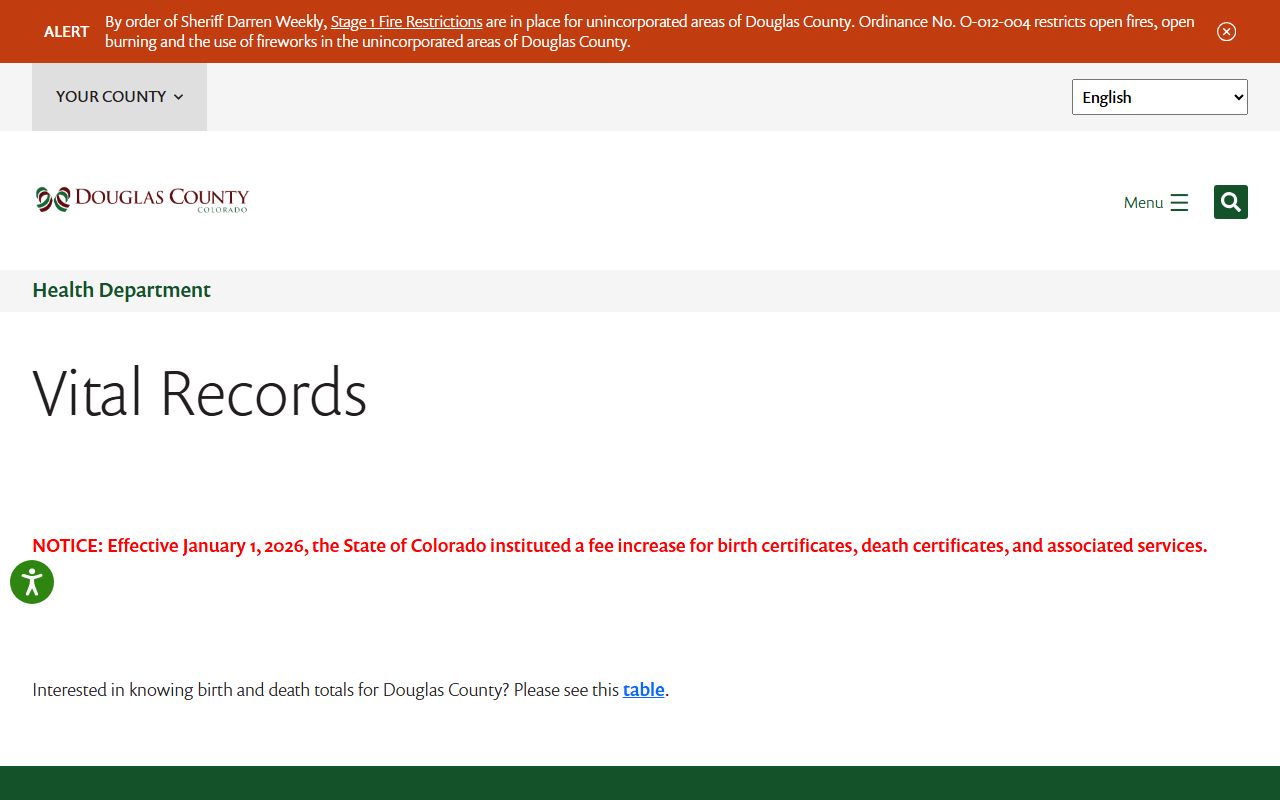
The Douglas County Health Department provides death certificates for any Colorado county. Their office is located at 11045 E. Lansing Circle, Suite 300, Englewood, CO 80112. You can visit in person during business hours. No appointment is necessary. The office handles requests from Monday through Friday, 8:30 a.m. to 4:30 p.m. Staff members are trained to assist with vital records requests. They can guide you through the process step by step.
Phone support is available at 720-643-2480. You can also reach staff by email at [email protected] The office can answer questions about required documents. They can explain who qualifies to request death records. Call ahead to save time. Staff want to help you get what you need. They understand these matters are urgent. Respect and efficiency guide their work.
Online orders are processed through the state system. Current processing time for online orders is 5 business days. This option works well for those who cannot visit Englewood. The online system accepts credit cards. It guides you through document uploads. You will receive certificates by mail. Plan ahead when choosing this method.
Understanding Confidentiality Laws
Colorado is a closed record state. C.R.S. § 25-2-117 makes death certificates confidential. This statute protects the privacy of deceased individuals and their families. Colorado vital records are not public records. They are not searchable online. This surprises many people who expect easy access. The law exists for good reasons. Identity theft is a real concern. Medical information is sensitive. Families deserve privacy during difficult times.
The Douglas County Coroner provides death certificate information but cannot issue copies. You cannot get a death certificate from the Coroner's Office. Certificates come from the funeral home or Vital Statistics. This distinction confuses many families. The coroner investigates deaths. The Health Department issues documents. Each office has a distinct role. Understanding this helps you avoid wasted trips.
Types of Death Certificates Available
Douglas County issues two types of death certificates. Each serves a different purpose. The Standard Death Certificate contains all legal and medical information. It includes the cause and manner of death. This version is often needed for legal proceedings. Insurance companies may require it. Estate attorneys frequently request this complete version.
The Simplified Death Certificate is also called a "pending" certificate. It contains only legal information. This includes the name, address, and Social Security Number. It does not list the cause or manner of death. All institutions must accept this version. Banks cannot refuse it. Government agencies must honor it. This certificate is useful when the cause of death is still under investigation.
Everyone who dies must have a death certificate issued. This is Colorado law. The process begins at the funeral home. Funeral directors work with medical certifiers. They ensure all information is accurate. The system protects public health. It creates official records for research. Families receive the documents they need for final arrangements.
Processing Times and Timelines
Speed matters when you need a death certificate. The timeline varies based on circumstances. A simplified certificate becomes available shortly after 5 days. This assumes no complications arise. Standard certificates without investigation follow the same timeframe. Most families receive documents within a week. This allows for quick estate processing. Bills can be paid. Accounts can be closed.
Some cases take longer. When an investigation or autopsy occurs, expect delays. The standard death certificate may take 4 to 6 weeks. The coroner must complete their work first. Medical examiners need time. Toxicology tests slow the process. Families should plan for this wait. Notify banks and creditors about the delay. Most will understand the situation.
The physician or coroner has 48 hours by law to return the death certificate to the funeral director. This rule comes from C.R.S. § 25-2-110. The statute sets filing requirements for death records. Funeral directors must register deaths within 5 days. These timelines keep the system moving. They prevent backlogs. They ensure records remain current.
Note: Winter months often see higher volumes of requests, which may extend processing times by several days.
Security Features of Certified Copies
Certificates from Douglas County meet high security standards. Each copy is printed on forgery-resistant safety paper. Watermarks appear when held to light. Raised engraving creates texture you can feel. Background security patterns prevent copying. A unique certificate ID number tracks each document. These features protect against fraud. They ensure authenticity. Institutions trust these official copies.
The security measures matter for legal purposes. Courts require certified copies. Insurance companies verify authenticity. Banks check security features. A plain photocopy will not suffice. Always request certified copies from the Health Department. The fees cover these security elements. You pay for protection. You pay for peace of mind.
Who Can Request Death Records
Access to Douglas County death records is limited by law. Eligible requesters include immediate family members. This means the surviving spouse, parent, child, sibling, or grandchild. Legal representatives also qualify. You must prove your relationship with valid identification. Documents like birth certificates work well. Marriage licenses serve as proof for spouses. Bring these when you visit the office.
Grandparents face additional requirements. They must provide a certified court order of guardianship. They may submit other legal documents showing tangible interest. This rule changed in recent years. Many grandparents were surprised by this update. The law seeks to protect family privacy. It limits access to those with direct legal standing. If you are a grandparent, consult an attorney. You may need to petition the court.
The coroner directs funeral directors where to electronically send death certificates for medical certification. This coordination ensures accuracy. It maintains the chain of custody. Electronic filing speeds the process. It reduces errors from handwriting. The system works well for most cases. Technology helps families receive documents faster.
Nearby Cities and Resources
Douglas County serves several communities. Residents of Castle Rock use the Englewood office. Parker families make the same trip. Those in Lone Tree and Highlands Ranch follow identical procedures. The Health Department understands the needs of these diverse communities. Staff provide respectful service to all visitors.
Each city within Douglas County has unique characteristics. Castle Rock is the county seat. Parker grows rapidly. Lone Tree offers suburban convenience. Highlands Ranch spans a large area. Despite these differences, all residents use the same vital records office. The central location in Englewood serves everyone equally. Parking is available at the facility. The building is accessible to people with disabilities.
Related City Pages
Death records for specific cities within Douglas County may have additional local resources. Check these related pages for city-specific information: