
Death Records in Teller County
Finding death records in Teller County requires knowing where to look. The Teller County Public Health & Environment Office manages these vital records for the entire county. Their staff handles requests for death certificates from 1910 onward. Families often need these death records for legal and personal matters. Searching for death certificates in Teller County is straightforward once you understand the process. You can obtain certified copies for estate work, insurance claims, or genealogical research. This guide explains how to access Teller County death records quickly.
Teller County Public Health Office Location
The Teller County Public Health & Environment Office sits in Divide, Colorado. This central location serves all communities within Teller County borders. Residents from Woodland Park, Cripple Creek, and Victor all use this same office. The address is 115 East Main Street in Divide. You can call them at 719-687-6415 for questions about death records. Staff members are ready to help you navigate the death certificate process.
Office hours run Monday through Friday from 8 a.m. to 4:30 p.m. The staff stops processing requests at 4 p.m. to ensure proper handling. Arrive early for same-day service on death records. The office closes for lunch from noon to 1 p.m. each day. Plan your visit around this break. The Teller County staff wants to serve you well.
The Vital Records Department at Teller County Public Health handles all death certificate requests. This department maintains strict standards for accuracy and privacy. They work closely with funeral homes in the area. Each death record receives careful attention before filing. The staff understands that these vital records matter deeply to families. They treat every request with respect.
Death Certificates Available at Teller County
Teller County can issue death certificates for any Colorado county from 1910 to present. This statewide coverage comes from electronic records shared across Colorado. You do not need to visit the county where the death occurred. This saves time for families dealing with loss. The Teller County office brings these death records to you locally.
Historical death certificates work differently. Records from before 1910 exist only in the county where the death happened. Teller County keeps these older records on file. They have death records for people who died within Teller County borders. These historical death certificates help with genealogy research. Families tracing roots in the Pikes Peak region find value here.
Note: All requests for Teller County death certificates go through the Public Health & Environment Office in Divide regardless of where the death occurred.
The electronic system makes modern death records easy to access. Staff can print certified copies quickly. These death certificates bear official seals and signatures. They meet legal requirements for all purposes. Banks, courts, and government agencies accept them.
How to Request Death Records
Teller County accepts death certificate requests in several ways. You can visit the office in person for same-day service. This option works best when you need death records quickly. Bring proper identification and payment. Staff can often process your request while you wait.
Mail requests work well for those who live far from Divide. Download the Death Certificate Certified Copy Application from the Teller County website. Complete all sections fully. Include a copy of your photo ID. Send payment by check or money order. Allow time for processing and return mail.
Phone requests are not accepted for death records. The office needs written applications with signatures. This rule protects against fraud. It ensures proper documentation for each death certificate. The Teller County staff follows state guidelines strictly.
You can view Samples of Death Certificate Styles before ordering. These samples show what your death records will look like. This helps you choose the right format for your needs.
Fees for Teller County Death Certificates
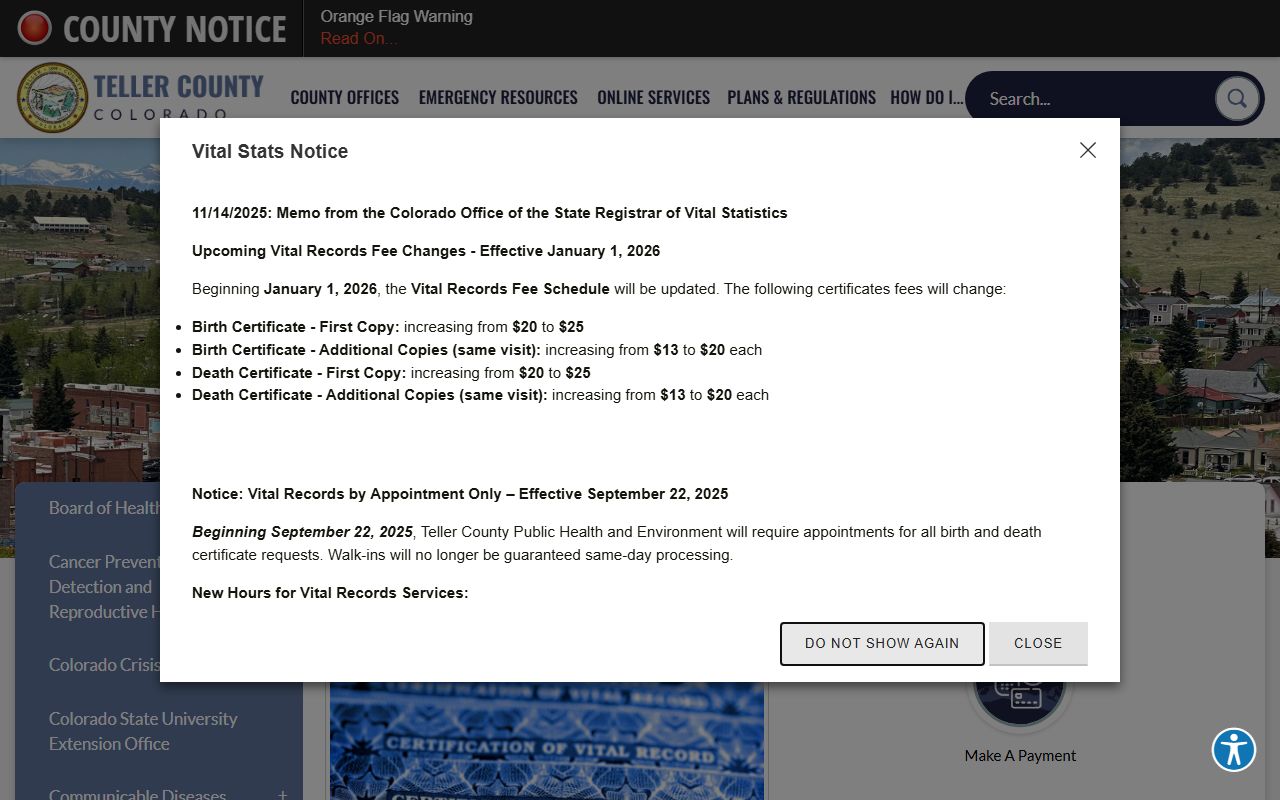
The cost for death certificates follows state guidelines. Teller County charges $25 for the first copy of a death certificate. Each additional copy ordered at the same time costs $20. These fees apply to all certified death records. The Vital Records Department accepts several payment types.
In-person visitors can pay with cash, check, or money order. Credit cards are accepted with a processing fee added. Make checks payable to Teller County Public Health. Exact cash amounts speed up the process. The staff provides receipts for all death certificate purchases.
Mail orders must include payment by check or money order. Do not send cash through the mail. The office cannot process incomplete requests. Include a stamped, self-addressed envelope for return shipping. This ensures your death records reach you safely.
ID Requirements for Death Records
Colorado law requires proof of identity for all death certificate requests. You must include a copy of your identification with every application. This rule applies to in-person and mail requests alike. Valid forms include driver's license, state ID, passport, or military ID. The ID must be current and legible.
Staff use this ID to verify your eligibility. They check that you have the right to receive these death records. Keep copies of what you submit. This protects you if questions arise later. The Teller County office handles your personal information securely.
Note: Expired identification will not be accepted for death certificate requests at the Teller County office.
Confidentiality Laws for Teller County Death Records
Under C.R.S. § 25-2-117, death records in Teller County remain confidential. This statute protects the privacy of deceased individuals and their families. Not everyone can obtain certified copies. Only qualified requesters receive these vital records.
Eligible parties include immediate family members. Spouses, parents, children, and siblings qualify. Legal representatives and those with tangible interest may also request death certificates. You must prove your relationship with documentation. Birth certificates and marriage licenses work well for this purpose.
The confidentiality rules prevent identity theft. They guard against fraud involving deceased persons. Teller County staff take these protections seriously. They verify each request carefully before releasing death records. This process may seem slow. It exists for good reasons.
Genealogists face restrictions when researching recent deaths. Records become public after 75 years in Colorado. Until then, only qualified requesters access these death certificates. Historical records from before 1910 have different rules. The Teller County office can explain what is available.
Filing Requirements Under Colorado Law
C.R.S. § 25-2-110 sets the rules for filing death records in Colorado. Funeral directors must file death certificates promptly. They work with medical certifiers to complete the forms. Accurate information prevents problems for families later.
The law requires specific details on every death certificate. Full name, date of birth, and date of death must appear. Cause of death comes from the attending physician. Place of death includes the exact location. Teller County funeral homes know these rules well.
Timely filing matters for legal processes. Estates cannot close without proper death records. Insurance claims depend on accurate certificates. The Teller County Vital Records Department checks each filing for completeness. They catch errors before records become permanent.
Corrections to death certificates require special handling. The state office in Denver processes all amendments. Teller County cannot change filed death records. You must provide proof of the correct information. This process takes time and documentation.
Nearby Counties for Death Records
Teller County sits in central Colorado near several other counties. Residents sometimes need death records from neighboring areas. Park County lies to the north of Teller County. El Paso County borders it to the east and south. Both counties have their own vital records offices.
You may need death certificates from these counties for various reasons. Family members may have died in nearby hospitals. Historical research might cross county lines. Genealogy work often spans multiple counties. Knowing your options helps you find the death records you need.
Each county follows Colorado state laws for death records. Fees and requirements remain consistent across the state. You can request certificates from any county office for deaths from 1910 onward. Choose the location most convenient for you.